In 2026, the regulatory and commercial environment for heated bedding has become significantly more demanding. Marketplace platforms are tightening their safety documentation requirements, insurance underwriters are asking harder questions about product liability coverage for electrical goods, and a single overheating incident — whether it results in a fire, a burn, or simply a viral complaint — can trigger returns, delistings, account suspensions, and legal exposure that far exceeds the margin on an entire season's sales.
For brand owners and B2B buyers sourcing a sherpa electric blanket, the most dangerous mistake is treating certification as a marketing label rather than a market-access requirement with traceable test evidence. A CE mark without a technical file, a UL reference without a matching model number on the test report, or an overheating protection claim without documented sensor architecture are all compliance gaps that create liability exposure even when the product itself performs correctly.
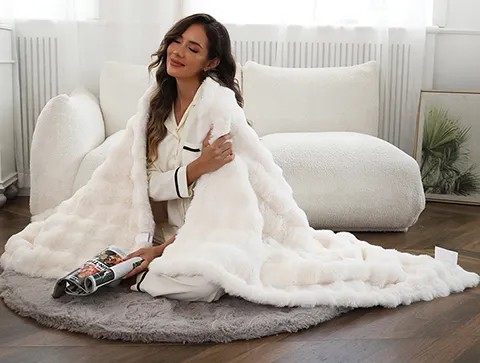
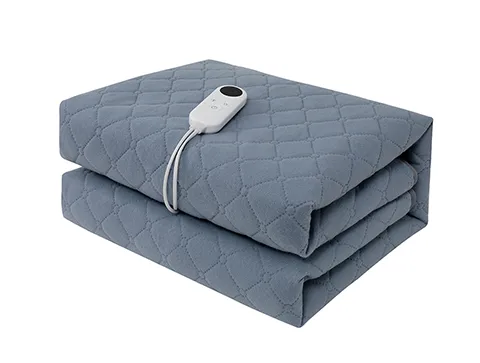
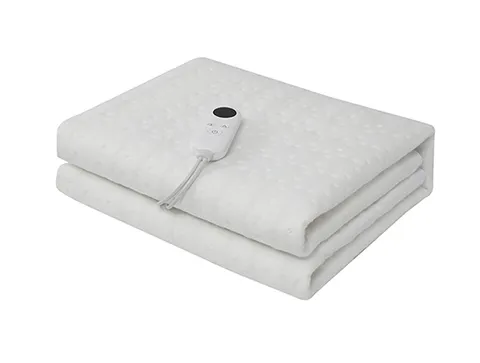
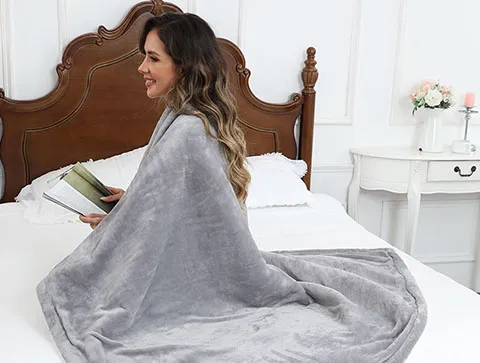
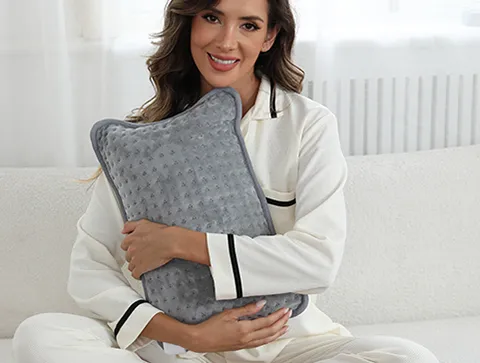
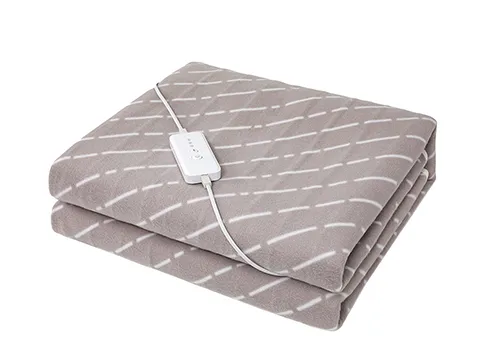
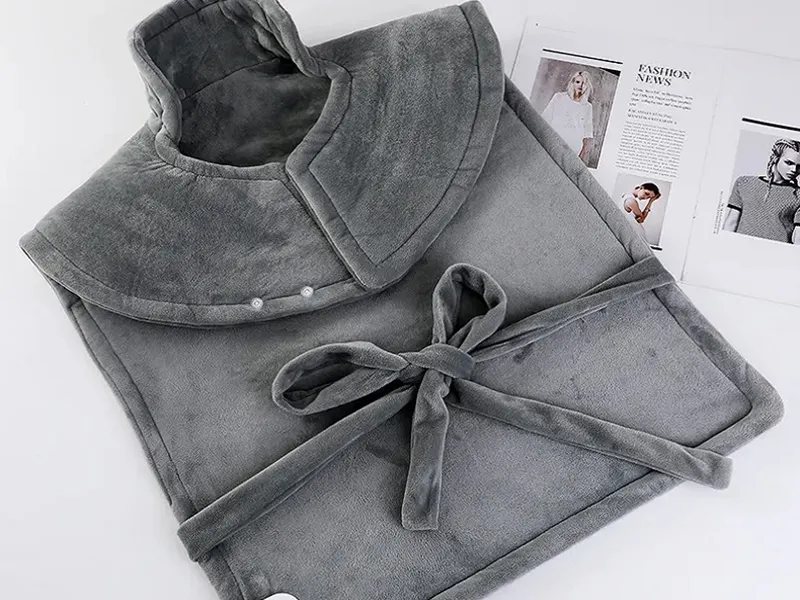
Mulan's flannel sherpa electric throw addresses this directly: the product specification lists carbon fiber heating wire, a whole-line constant temperature system, an overheat protection mechanism, timer-based shutoff, and a certification set that includes UL, CE, LVD, EMC, ROHS, and SAA — the foundations that North American and EU market-access compliance requires. This article explains what those certifications mean, how the safety features work, and what buyers need to confirm before placing an order.
UL Listed Heated Blankets vs ETL Certified Electric Blanket Marks vs CE: What Each Certification Really Means for Sellers
Understanding the difference between certification marks is not a technical exercise — it is a commercial risk management decision. Selling a product with the wrong mark, or with a mark that does not match the tested model, creates liability exposure that the certification was supposed to prevent.
UL Listed (North America)
A UL Listing Mark indicates that the product was evaluated by UL — Underwriters Laboratories, an OSHA-recognized Nationally Recognized Testing Laboratory — to an applicable safety standard, and that UL has determined the product meets the requirements of that standard. For electric blankets sold in the United States and Canada, UL listing to the relevant heated bedding standard is the most widely recognized compliance pathway.
The critical detail for sellers is traceability: the UL Listing Mark on the product label must match the exact model number, voltage, wattage, and plug configuration covered by the UL test report. A report that covers one voltage variant does not automatically cover another. A report that covers one size does not automatically cover a different size if the heating element configuration changes. Confirming that the report matches the exact SKU being ordered is the most important compliance verification step in the sourcing process.
ETL Listed (North America)
The ETL Listed mark is issued by Intertek, also an OSHA-recognized NRTL. ETL and UL can certify products to the same safety standards, and Authorities Having Jurisdiction — the inspectors and regulators who enforce electrical safety requirements — generally accept ETL listings in the same way they accept UL listings when the product is properly listed and labeled. For marketplace sellers, both UL and ETL listings are recognized by major platforms as evidence of North American safety compliance for electrical products.
The practical implication for buyers is that ETL listing is a legitimate and equivalent compliance pathway to UL listing for North American market access — the choice between them is typically a matter of testing cost, timeline, and supplier relationship rather than compliance value.
CE (European Union)
The CE mark is not equivalent to a UL or ETL Listing mark, and the two should not be treated as interchangeable. CE is part of the EU conformity framework — a manufacturer's declaration that the product meets the requirements of the applicable EU directives, which for electric blankets typically include the Low Voltage Directive (LVD) and the Electromagnetic Compatibility Directive (EMC). The CE mark does not require third-party certification by a notified body for most heated bedding products, but it does require a technical file that documents the conformity assessment, the applicable standards, and the test results.
For sellers targeting both North American and EU markets, the compliance requirement is additive: CE for the EU, UL or ETL for North America. A product with only CE cannot be sold as compliant in the US or Canada, and a product with only UL or ETL cannot carry the CE mark for EU sale.
The 2026 Compliance Pain Point
Most compliance failures in 2026 are not caused by product quality problems — they are caused by documentation and traceability gaps. The wrong label artwork, a report that covers a different model number, a certification that covers one voltage but not the other, or a plug variant that was not included in the original test scope are all gaps that create marketplace delisting risk and legal exposure even when the product itself is safe. Confirming traceability — that the certification documents match the exact product being ordered — is the compliance step that most buyers skip and most problems trace back to.
Overheating Protection Technology Inside a Sherpa Electric Throw: How Safety Features Reduce Fire Risk
The certification mark on the label is the market-access credential. The safety features inside the blanket are the risk-control mechanism. Understanding how those features work — and what to verify with the supplier — is the difference between a compliance story that holds up under scrutiny and one that collapses when a customer complaint triggers an investigation.
Carbon Fiber Heating Wire
Mulan's flannel sherpa electric throw uses carbon fiber heating wire as the heating element. Carbon fiber heating wire distributes heat more evenly across the blanket surface than conventional resistance wire, reducing the temperature differential between the hottest and coolest points on the blanket. More uniform heat distribution means fewer localized hot spots — which are the primary ignition risk in electric blanket failures — and more consistent warmth across the entire blanket surface.
Whole-Line Constant Temperature and Overheat Protection
The product specification describes a whole-line constant temperature system combined with an overheat protection mechanism. In a correctly implemented design, the constant temperature system maintains the heating wire within a defined temperature range across the full length of the wire, and the overheat protection system detects any condition where the wire temperature exceeds the safe operating limit and interrupts power to the heating element.
For buyers building a compliance and safety story, the important verification step is confirming the sensor architecture with the supplier. Overheat protection can be implemented through NTC (negative temperature coefficient) thermistors embedded in the heating wire, through bimetallic thermal cutoffs, or through other thermal sensing approaches. NTC-based protection provides continuous temperature monitoring along the wire length, which is the most robust approach for detecting localized hot spots. Requesting documentation of the specific sensor architecture and the test evidence for the overheat protection function is the due diligence step that supports a defensible safety claim.
Timer-Based Shutoff
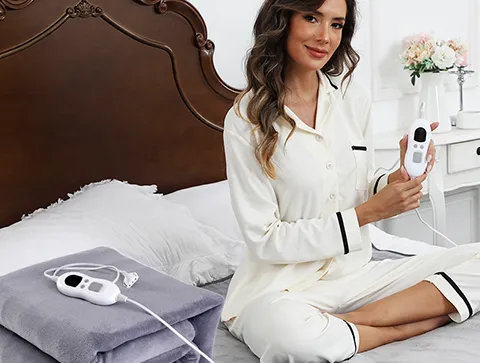
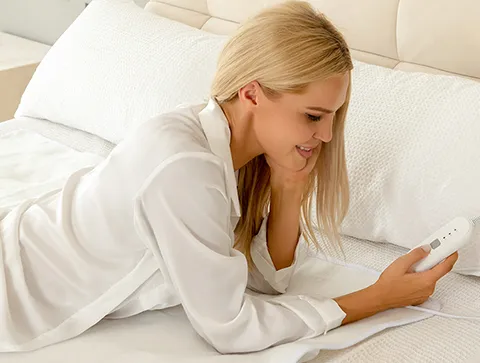
The LCD controller supports timer settings from 1 to 9 hours, with additional options for 2, 4, 6, 8, and 12-hour intervals depending on the controller variant. Timer-based shutoff reduces overnight overheating risk by ensuring the blanket does not remain powered indefinitely during sleep — the highest-risk use scenario for electric blankets. For marketplace listings and product descriptions, the timer shutoff feature is a concrete, verifiable safety claim that supports customer confidence and reduces the "left it on all night" complaint category.
The controller also provides six heat settings across a temperature range of 30 to 55°C, allowing users to select the minimum heat level that meets their comfort requirement rather than running at maximum power continuously.
Key Specs and Configurations to Lock Down with a Safe Electric Throw Manufacturer
Specifying a sherpa electric throw for a compliant, market-ready SKU requires aligning the product configuration with the certification scope before the order is placed. Changes to voltage, plug, size, or controller after the certification test has been completed may require retesting — which adds cost and delays the launch timeline.
Before locking the final SKU, buyers should also confirm whether the 60×80 inch option will be marketed as a sherpa heated blanket full size, because size-related claims must align with the certified dimensions, packaging copy, and marketplace listing attributes
Specification Checklist
| Parameter | Mulan ML-G01 Options | Compliance Implication |
|---|
| Size | 50×60 inch and 60×80 inch | Confirm which sizes are covered by the certification report |
| Material | Flannel / Flannel + Sherpa | Confirm material specification matches the tested product |
| Controller | LCD, 6 heat settings, 1–9H timer / 2/4/6/8/12H timer options | Confirm controller variant matches the certified configuration |
| Temperature range | 30–55°C | Confirm operating range is within the certified thermal limits |
| Heating element | Carbon fiber heating wire | Confirm element specification matches the tested product |
| Voltage and power | 110V/60Hz/80W (North America) / 240V/50Hz/110W (EU/AU) | Each voltage variant requires its own certification coverage |
| Plug variants | USA, UK, SAA, VDE | Confirm plug variant is covered by the relevant certification |
| Wire cable | 2M | Confirm cable length and strain relief match the tested configuration |
| Certifications | CE, ROHS, LVD, EMC, SAA, UL | Confirm each mark covers the exact model number and configuration being ordered |
| Packaging | Zipper bag / color box with handle | Confirm packaging matches the import and retail requirements for the target market |
The Voltage-Certification Alignment Rule
The most common specification error in electric blanket sourcing is ordering a voltage variant that is not covered by the certification documents. A UL test report that covers the 110V/60Hz/80W configuration does not automatically cover the 240V/50Hz/110W configuration — the two variants have different power levels, different thermal profiles, and different electrical safety characteristics that require separate testing. Confirm with Mulan which certification documents cover which voltage and plug combinations before finalizing the order specification.
Application Scenarios: Where a Sherpa Electric Blanket Needs Strong Documentation
E-Commerce and Marketplace Brands
For Amazon, Walmart Marketplace, and other major platform sellers, certification documentation is both a listing requirement and a liability management tool. Platforms increasingly require sellers to provide certification evidence at listing creation and to maintain that evidence through periodic compliance reviews. A sherpa electric throw with complete, traceable UL or ETL documentation and matching label artwork reduces the risk of listing suspension and provides the evidence base needed to respond to platform compliance inquiries without disruption to sales.
Retail and Promotional Programs
Retail buyers — department stores, home goods chains, and promotional merchandise programs — typically require certification documentation as part of the vendor qualification process. A product with CE, UL, and SAA coverage across the relevant voltage and plug variants can be positioned for multi-market retail programs without requiring separate sourcing for each market. The detachable connector and machine-washable design reduce hygiene-related returns during peak season, which is a practical margin protection feature for retail programs with high return rate sensitivity.
Hospitality and Spa Warm-Throw Applications
For hospitality and spa applications where electric throws are used in guest-facing environments, the combination of timed shutoff, overheat protection, and machine-washable design addresses the three primary operational concerns: fire risk during unattended use, hygiene maintenance between guests, and liability documentation for the property's insurance and safety compliance requirements. Confirm with your legal and insurance advisors whether electric blanket use is permitted under your property's policy before specifying for this application.
Care, Maintenance, and TCO: Lower Returns, Fewer Claims, Better Margin in 2026
Care Design That Protects Safety and Reduces Returns
Mulan's flannel sherpa electric throw features a detachable connector that separates the electrical components from the blanket fabric before washing. This design allows the blanket to be machine washed without exposing the controller or heating wire connections to water — the most common cause of electric blanket failure after washing. The detachable design also allows the blanket to be replaced independently of the controller if the fabric wears before the electrical components, reducing the cost of maintenance for commercial users.
For B2B buyers managing inventory across a season, a simple inspection SOP — check the cord and controller for physical damage, confirm the connector seats correctly, avoid storing the blanket with heavy objects compressing the heating wire — reduces the rate of damage-related returns and extends the usable life of the product.
TCO Framework for Sellers
| Cost Item | Without Correct Certification and Safety Features | With Correct Certification and Safety Features |
|---|
| Marketplace delisting risk | High — documentation gaps trigger compliance reviews | Low — traceable documents match exact SKU |
| Overheating complaint rate | High — inadequate protection generates safety complaints | Low — overheat protection and timer shutoff reduce incidents |
| Return rate from washing damage | High — non-detachable design exposes electrical components | Low — detachable connector protects electrical components |
| Legal and insurance liability | High — incomplete safety documentation weakens defense | Low — certified design with traceable evidence supports defense |
| Customs clearance delays | High — missing or mismatched certification documents | Low — complete documentation aligned to voltage and plug variant |
For a seller moving 5,000 units per season at a 3% return rate reduction from better safety documentation and protection features, the avoided return cost — including reverse logistics, inspection, and restocking — typically exceeds the unit cost premium for a certified product within the first season.
Conclusion
For 2026 sellers, the safest growth path in heated bedding is straightforward: source a sherpa electric blanket that pairs genuine comfort with verifiable safety controls — overheat protection, timer-based shutoff, and carbon fiber heating wire — and market-correct certifications that match the exact SKU, voltage, and plug configuration being sold. Mulan's flannel sherpa electric throw provides the specification foundation and certification set that North American and EU market-access compliance requires, with the detachable washable design that reduces returns and the documentation traceability that reduces compliance risk.
Get Your Recommended Configuration and Quote
Visit the flannel sherpa electric throw product page to review the full specification and certification list, then submit the following details to receive a matched configuration and quotation:
| Parameter | What to Provide |
|---|
| Work condition | Target market (US/CA/EU/UK/AU), sales channel (Amazon, retail, B2B), expected seasonality |
| Quantity | Trial order quantity and monthly or seasonal forecast |
| Size and spec | Size (50×60 or 60×80 inch), fabric (flannel or flannel + sherpa), voltage and plug variant, controller type (heat levels and timer), packaging preference |
| Target metrics | Required certification marks (UL/ETL/CE/SAA), maximum wattage, timer range, acceptable defect and return rate |
| Current problem | Certification gaps, overheating complaints, high return rate, labeling or document mismatch, customs clearance delays |
FAQ
Q1: What is a sherpa electric blanket?
A sherpa electric blanket is a heated throw with a soft sherpa lining on one side and a built-in carbon fiber heating element connected to a detachable controller. The controller lets users choose from six heat settings and set an auto-shutoff timer. The carbon fiber wire heats up fast and distributes warmth evenly across the full blanket surface.
Q2: What is the difference between UL, ETL, and CE certification?
UL and ETL are both accepted North American safety marks — UL issued by Underwriters Laboratories, ETL by Intertek. Either mark satisfies platform and retailer compliance requirements for the US and Canada. CE is the EU conformity mark, covering directives such as LVD and EMC. CE does not satisfy North American requirements, and UL/ETL does not cover the EU market. If you sell in both regions, you need both.
Q3: Why does certification matter more than finding the lowest unit price?
One overheating complaint, platform delisting, or liability claim can cost more than an entire season's margin. Certified products reduce return rates from safety complaints, lower the risk of marketplace removal, and provide traceable documentation if a legal issue arises. The unit cost premium for a properly certified blanket is typically far smaller than the cost of one serious compliance event.
Q4: Do we need to redesign the product to meet UL, ETL, or CE requirements?
Not necessarily. If you are ordering a configuration already covered by existing certifications, the main task is confirming that your voltage, plug, size, and controller variant match the certified spec and that label artwork is compliant. Redesign and retesting are only required if you need a configuration not covered by current documentation — in which case timeline and cost should be factored into your sourcing plan early.
Q5: What do we need to provide for a quote?
To get an accurate quote, please share:
Target market and required certification marks (UL, ETL, CE, SAA, or combinations)
Voltage and plug type for each market
Size and material (flannel only, or flannel + sherpa)
Controller spec — heat settings, timer range, display type
Packaging — zipper bag or color box
Private label requirements, if any
Order quantity — trial order and seasonal forecast
Any existing issues to solve: overheating complaints, return rate, certification gaps, or customs problems
 English
 français
 Deutsch
 Español
 italiano
 português
 Polska
 Nederland