In 2026, the operational pressure on spas, wellness chains, physiotherapy clinics, and hotel massage rooms has intensified on two fronts simultaneously. Appointment density is higher — back-to-back bookings with 10 to 15 minutes between clients are now standard in competitive markets — and hygiene expectations have risen, driven by post-pandemic client awareness, tighter local health authority inspection standards, and the visibility that online reviews give to any complaint about cleanliness or odor.
A heated massage blanket improves client comfort and supports therapeutic warmth throughout a session. It also becomes a hygiene hotspot the moment the session ends. Massage oil, sweat salts, body lotion, and disinfectant overspray all transfer to the blanket surface during normal use, and in a high-turnover environment, the time available to address that contamination between clients is measured in minutes rather than hours.
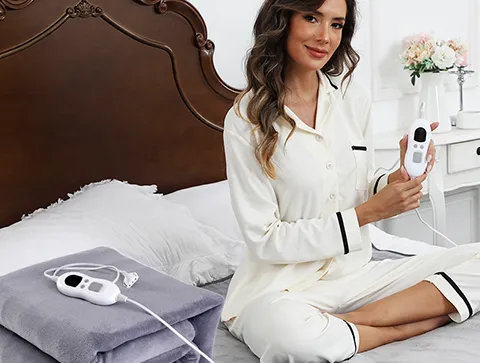
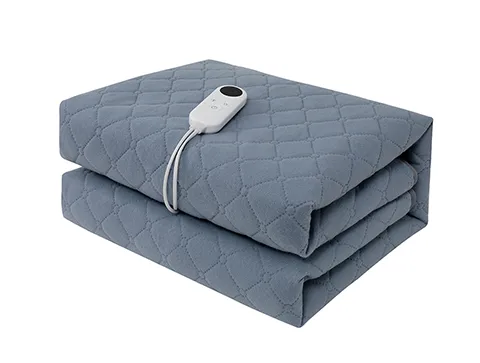
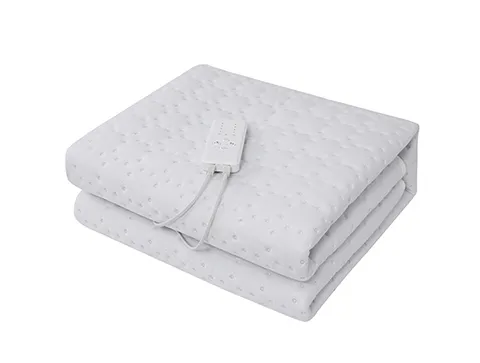
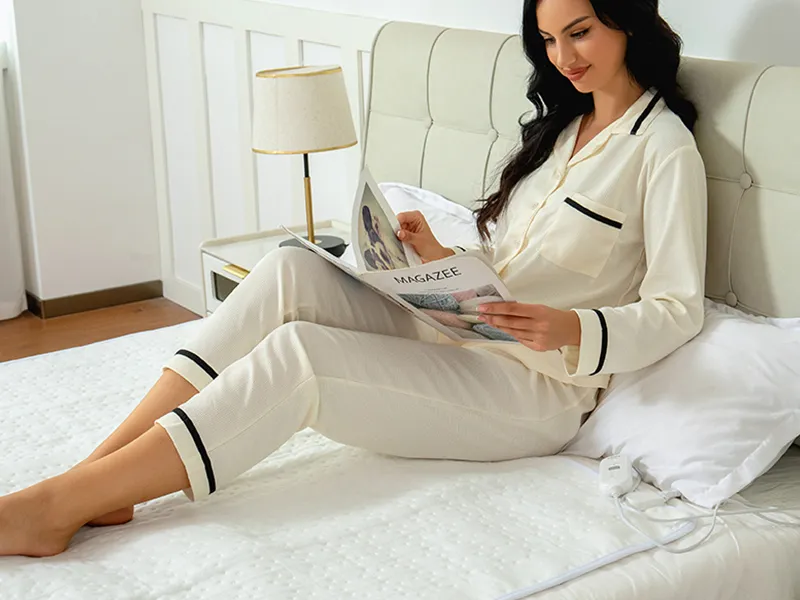
The challenge is not whether to clean — it is how to clean fast, consistently, and safely without damaging the heating system, creating a safety risk, or leaving residues that accumulate into odor and staining problems over time. Mulan's massage bed electric blanket is designed for exactly this environment: carbon fiber heating wire for even warmth, a whole-line constant temperature and overheating protection system for continuous daily use safety, and a detachable connector that makes the blanket fabric machine washable — the feature that makes a professional hygiene routine operationally practical.
How the Heated Massage Blanket Works and Why Cleaning Rules Matter
Understanding the heating system architecture explains why certain cleaning approaches protect the blanket's performance and safety, and why others damage it.
Carbon Fiber Heating Wire
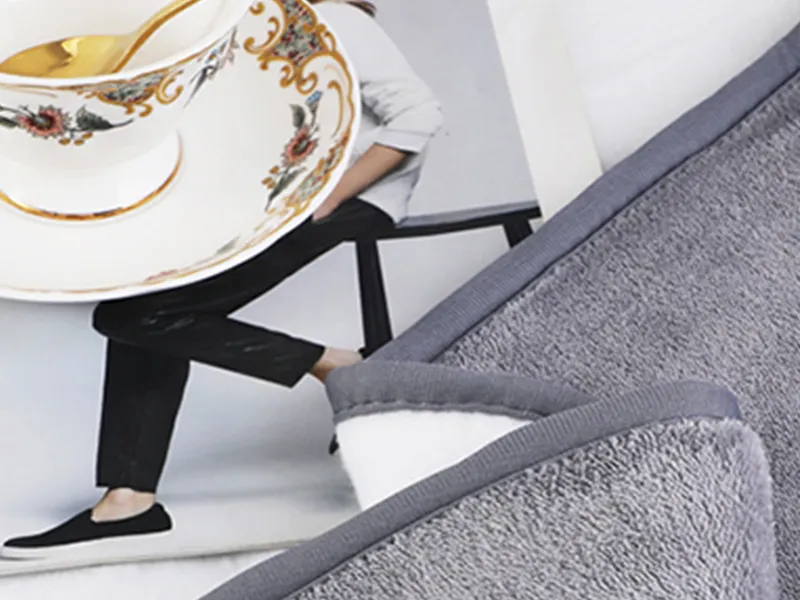
Mulan's Electric Massage Table Warmer uses carbon fiber heating wire as the heating element. Carbon fiber wire distributes heat evenly across the blanket surface, eliminating the localized hot spots that conventional resistance wire can produce when the wire is compressed or folded repeatedly. Even heat distribution is both a comfort feature — clients experience consistent warmth across the full table surface — and a safety feature, because localized overheating is the primary mechanism through which electric blanket failures occur.
The controller provides 3 or 6 heat settings depending on the model, allowing staff to select the warmth level appropriate for the service type and client preference. The whole-line constant temperature system maintains the heating wire within a defined temperature range across its full length, and the overheating protection system interrupts power if the wire temperature exceeds the safe operating limit — a critical safety layer for a product used continuously across multiple sessions per day.
Why Cleaning Impacts Performance and Safety
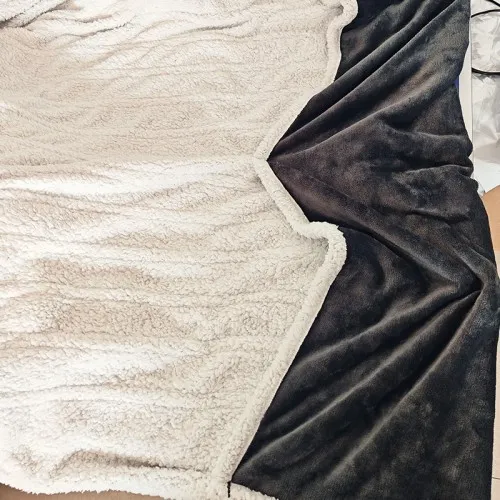
Oil residues that penetrate the blanket fabric and reach the heating wire layer can affect the thermal environment around the wire, potentially contributing to localized temperature elevation over time. More immediately, oil and sweat residues that accumulate in the fabric affect the tactile quality of the blanket surface — the flannel and sherpa texture that clients experience — and generate odor that is detectable even when the blanket appears visually clean.
Aggressive cleaning that introduces liquid into the connector area, the cable exit points, or the controller interface creates the most serious risk: electrical component failure from moisture ingress. A blanket that fails due to liquid damage to the connector is not a product quality failure — it is a maintenance procedure failure. The detachable connector design addresses this risk by allowing the blanket fabric to be fully immersed in water for machine washing while the electrical components remain completely dry and protected.
Key Specs and Configurations That Make Cleaning Easier
Specifying the correct configuration before purchase determines whether the blanket supports a professional hygiene routine or creates operational friction that leads to shortcuts and accumulated contamination.
Specification Checklist for Professional Spa Procurement
| Parameter | Mulan Electric Massage Table Warmer | Hygiene and Operational Implication |
|---|
| Material | Flannel/Sherpa + polyester | Soft client contact surface; polyester content supports dimensional stability through repeated washing |
| Washability | Detachable connector; machine washable blanket | Enables full fabric washing without exposing electrical components to water |
| Size options | 150×80 cm / 160×140 cm / 180×130 cm | Match to table dimensions to minimize fabric overhang that contacts the floor or oil bottles |
| Controller | 3 or 6 heat settings | 6-setting controller supports finer temperature adjustment for different service types |
| Cable length | 2 m | Plan routing away from oil storage, foot traffic, and cleaning spray zones |
| Certifications | CE, ROHS, LVD, EMC, SAA, UL | Supports multi-market procurement and internal compliance documentation for health authority audits |
| Packaging | Zipper bag / color box with handle | Zipper bag supports clean storage and inventory separation between washed and unwashed units |
Size Selection for Hygiene Efficiency
Selecting the correct blanket size for the table dimensions reduces the hygiene management burden. A blanket that is significantly larger than the table surface will overhang the edges, increasing the risk of contact with floor contaminants, oil bottles, and cleaning equipment. A blanket sized to fit the table surface stays in position during the session and is easier to remove cleanly at the end of the session without dragging contaminated fabric across the table surface.
Cleaning Heated Massage Pads the Right Way: Practical SOPs for Oils, Sweat, and Odor Control
Barrier Protection as the First Line of Defense
The most effective hygiene strategy for a heated massage blanket in a high-turnover environment is preventing contamination from reaching the blanket fabric in the first place. A clean sheet placed over the blanket, combined with a disposable barrier cover or a dedicated washable top layer, intercepts the majority of oil, sweat, and lotion transfer during the session. The sheet and barrier cover are changed between every client — a fast, low-cost operation — while the blanket itself requires only spot-cleaning between clients and scheduled machine washing on a defined cadence.
For oil-heavy services — deep tissue massage, hot stone, body wrap — the barrier layer is not optional. Oil penetration through a single sheet layer to the blanket fabric is common in these services, and without a barrier, the blanket will require machine washing after every session rather than on a scheduled cadence.
Between-Client Spot-Clean Protocol
The between-client spot-clean is a 2 to 3 minute procedure that addresses any contamination that has reached the blanket surface despite the barrier layer.
Power off and unplug the controller before any cleaning activity begins. This is a non-negotiable safety step — no liquid should be applied to or near the blanket while it is connected to power.
Remove the sheet and barrier cover and set aside for laundering. Inspect the blanket surface visually for oil spots, staining, or moisture. Apply a small amount of mild detergent or approved fabric-safe disinfectant to a clean cloth — not directly to the blanket — and wipe the affected area. Avoid saturating the fabric, and keep all liquids away from the connector area and cable exit points.
Allow the spot-cleaned area to air-dry before replacing the sheet and barrier cover. A damp blanket covered with a sheet creates the warm, moist conditions that support odor development and microbial growth — the opposite of the hygiene outcome the cleaning was intended to achieve.
Scheduled Machine Wash Protocol
The machine wash cycle removes the accumulated residues that spot-cleaning cannot address: oil that has penetrated the fabric fibers, sweat salts that have dried into the fabric, and detergent residues from repeated spot-cleaning.
Detach the connector from the blanket before washing. The connector and controller must remain completely dry throughout the washing and drying process. Machine wash the blanket according to the care label instructions — typically a gentle cycle with mild detergent at the temperature specified for the fabric. Do not use bleach or fabric softener, which can degrade the fabric fibers and affect the thermal properties of the blanket.
Dry the blanket completely before reconnecting the controller or returning it to service. Damp storage is the most common cause of persistent odor in professional spa linens — moisture trapped in folded fabric creates anaerobic conditions that generate odor compounds that are difficult to remove with subsequent washing.
Odor Control as a Hygiene Metric
Odor is the hygiene failure that clients notice most immediately and report most consistently in online reviews. In a professional spa environment, odor from a massage blanket is a direct indicator that the cleaning protocol is not removing contamination effectively — either because the wash frequency is too low, the drying process is incomplete, or the barrier protection is insufficient for the services being performed.
Aligning the wash frequency to the actual contamination load — more frequent washing for oil-heavy services, less frequent for dry or light-touch services — and ensuring complete drying before storage are the two most effective odor control measures available without changing the product.
Installation, Selection, Maintenance, and TCO: Keeping the Massage Blanket Reliable Through the Season

Room Setup and Cable Management
Route the 2 m cable away from foot traffic paths, oil storage areas, and the zones where cleaning spray is applied between clients. A cable that is repeatedly stepped on, pulled by staff moving around the table, or exposed to disinfectant spray will develop insulation damage at the stress points — a failure mode that is entirely preventable with correct initial routing and a simple cable management clip or guide.
Use the zipper storage bag to separate clean blankets from blankets awaiting washing. In a multi-room operation, a clear labeling system — clean, in use, to wash — prevents the most common operational error: returning an unwashed blanket to service because it was stored with clean units.
Selection for Chains and Multi-Room Operations
Standardizing the blanket size across all tables of the same model simplifies procurement, reduces the risk of size mismatch errors, and allows blankets to be rotated between rooms without fitting issues. For operations with a mixed service menu, the 6-setting controller provides more flexibility for staff to match warmth to service type without requiring separate blanket models for different rooms.
For operations running 8 or more sessions per day per table, a rotation of at least two blankets per table — one in service and one in the wash or drying cycle — ensures that a clean, fully dry blanket is always available without delaying the room reset.
Maintenance Inspection Checklist
| Inspection Item | Frequency | What to Check |
|---|
| Connector condition | Daily | Secure seating, no corrosion, no moisture ingress |
| Cable condition | Daily | No kinking, fraying, or insulation damage at stress points |
| Controller buttons | Weekly | Responsive, no sticking, no liquid ingress |
| Fabric surface | Per wash cycle | No permanent staining, no thinning at fold lines, no wire protrusion |
| Heat distribution | Monthly | Even warmth across full surface; no cold zones indicating wire damage |
TCO Framework for Spa Operators
| Cost Item | Without Structured Hygiene Protocol | With Structured Hygiene Protocol |
|---|
| Blanket replacement frequency | High — oil staining and odor cause early replacement | Low — barrier protection and scheduled washing extend service life |
| Client complaint rate | High — odor and staining generate negative reviews | Low — consistent cleanliness supports positive reviews |
| Room turnover time | Slow — unstructured cleaning takes longer and is less consistent | Fast — defined SOP enables 10 to 15 minute reset |
| Equipment failure rate | High — liquid ingress from incorrect cleaning damages connectors | Low — detachable connector design prevents washing damage |
| Bookable appointments per day | Lower — slow turnover reduces available slots | Higher — faster reset increases daily appointment capacity |
For a spa running 6 rooms with 8 sessions per day per room, reducing the between-client reset time by 5 minutes per turnover creates 48 additional minutes of bookable time per room per day — equivalent to one additional appointment per room per day at typical session lengths.
Conclusion
In a high-turnover spa or clinic environment, hygiene is not a single cleaning action — it is a system of barrier protection, fast between-client spot-cleaning, scheduled machine washing, complete drying, and simple daily inspections that prevent equipment damage and maintain the client experience that drives repeat bookings. A massage bed electric blanket with a detachable washable design, carbon fiber heating wire, and overheating protection is the product architecture that makes that system operationally practical in 2026 high-traffic professional environments.
Mulan's Electric Massage Table Warmer provides the specification foundation — machine-washable fabric, professional certifications, multiple size options, and a safety-first heating system — that wellness operators need to build a compliant, efficient, and client-ready hygiene routine.
Get Your Recommended Configuration and Quote
Visit the Electric Massage Table Warmer product page to review the full specification, then submit the following details to receive a matched configuration and quotation:
| Parameter | What to Provide |
|---|
| Work condition | Spa or clinic type, daily turnover frequency (clients per room per day), oil-heavy services (yes or no), cleaning protocol requirements |
| Quantity | Number of rooms and tables, spare units needed for wash rotation |
| Size and spec | Table dimensions, preferred blanket size, 3 or 6 heat settings, plug and voltage for target market |
| Target metrics | Maximum reset time between clients, wash frequency plan, expected service life, allowable noise and heat levels |
| Current problem | Oil seepage or staining, persistent odor, slow turnover, blanket failures, hygiene audit concerns |
FAQ
Q1: What is a massage blanket used for in professional spas?
It is an electric heated table warmer placed under client linen on the massage table. It provides consistent full-surface warmth throughout the session, supporting muscle relaxation and client comfort. Our blanket uses carbon fiber heating wire for even heat distribution, with overheating protection for daily use safety and a detachable connector for easy machine washing.
Q2: How does a heated blanket compare to heated rooms or hot towels?
A heated blanket provides consistent warmth across the full table surface for the entire session. Heated rooms consume high energy and create uneven temperature. Hot towels cool quickly and require repeated therapist interruption. For high-turnover spas prioritizing comfort, hygiene, and efficiency, an electric table warmer is the most practical solution.
Q3: How does proper hygiene maintenance improve spa profitability?
Three ways: faster room turnover increases daily bookings per room; fewer hygiene complaints reduce negative reviews and refund requests; correct washing extends blanket lifespan and lowers replacement costs. A consistent cleaning protocol typically improves revenue per room and reduces operating cost per session.
Q4: Do we need to modify our tables or treatment rooms to use this blanket?
No modification needed. Simply route the 2m cable safely to the wall outlet, use a barrier cover during sessions to protect the blanket, and follow a standard wash SOP. The key rule: always detach the connector before washing and ensure the blanket is fully dry before reuse.
Q5: What information do we need to provide for correct product selection and quoting?
Please provide: table dimensions and preferred blanket size (150×80cm, 160×140cm, or 180×130cm), heat settings needed (3 or 6), voltage and plug type, daily turnover volume per room, wash frequency, and your main concern — oil seepage, odor, slow turnover, equipment damage, or hygiene compliance. Size and wash frequency most directly affect the right fit for your operation.
 English
 français
 Deutsch
 Español
 italiano
 português
 Polska
 Nederland