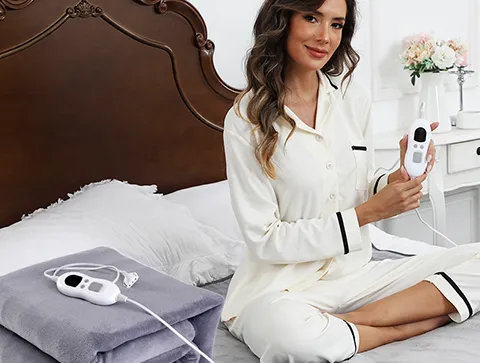
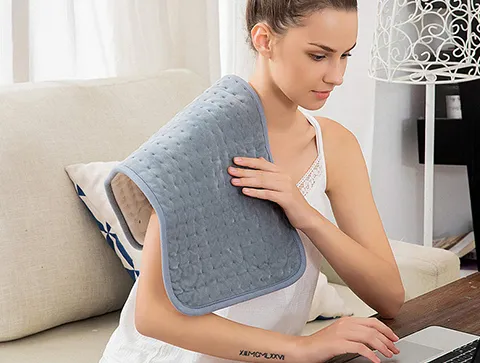
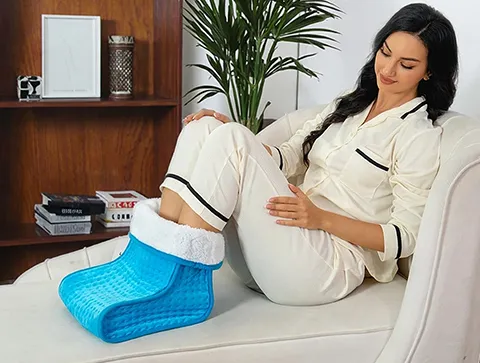
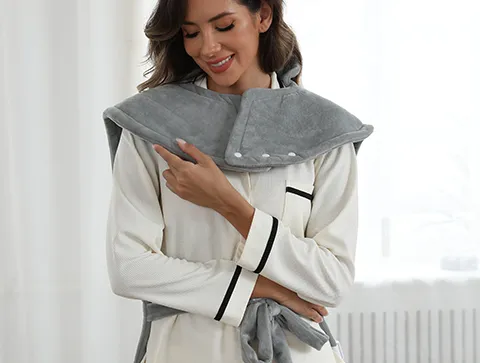
In 2026, the self-care category has completed its transition from niche wellness trend to mainstream consumer expectation. Shoppers who discovered home thermotherapy products during the past several years have not moved on — they have upgraded, repurchased, and recommended. Search interest in heated wraps, shoulder warmers, and targeted heat therapy products shows consistent year-round baseline demand with strong seasonal peaks in Q4, and the broader home healthcare market is projected to continue expanding as consumers prioritize non-pharmaceutical pain management options for everyday muscle tension and stiffness.
For e-commerce sellers, this creates a specific opportunity: a shoulder heat pad positioned as a self-care and thermotherapy product — not just a winter accessory — can generate revenue across a longer selling window than most seasonal SKUs, with the kind of repeat purchase and gifting behavior that supports sustainable margin.
The problem is that the category has also attracted low-quality competition. Ad costs are higher, review standards are more demanding, and marketplace compliance scrutiny on electrical products has intensified. Sourcing a shoulder heat pad as a commodity textile — cheapest factory, minimal documentation, generic packaging — is a path to returns, delistings, and margin erosion. Sourcing it as a compliance-ready, spec-verified product with a clear safety and comfort story is a path to a defensible hero SKU.
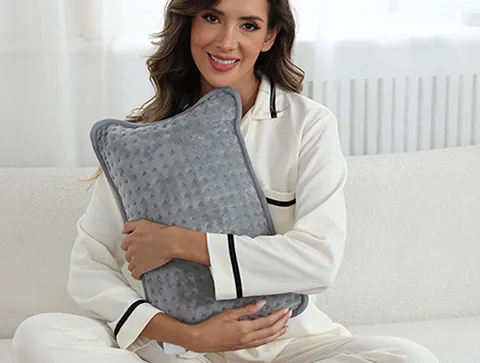
Mulan's Electric Shoulder Pad provides the specification foundation that supports the second approach: carbon fiber heating technology, six adjustable heat settings, overheating protection, ultra-soft flannel construction, a detachable machine-washable design, and CE and UL certification — the spec stack that converts browsers into buyers and keeps return rates low enough to protect margin.
Trend Signal to SKU Selection: Why Heated Wraps Are Best‑Selling Winter Items With Year‑Round Potential
The first question any e-commerce buyer should answer before committing inventory is whether the demand signal is real and durable. For shoulder heat pads and electric shoulder blankets, the answer in 2026 is yes on both counts — but the nuance matters for how you position and time your inventory.
The Seasonality Signal
Google Trends data for heated wrap and shoulder warmer search terms shows a consistent pattern: strong baseline interest from September through March in Northern Hemisphere markets, with a pronounced peak in November and December driven by gifting behavior, and a secondary peak in January driven by post-holiday self-purchase. This seasonality is predictable enough to plan inventory around — Q3 ordering for Q4 launch is the standard playbook for this category.
What has changed in 2026 is the off-season floor. Search interest in self-care and home thermotherapy products no longer drops to near-zero in warmer months. Consumers who use a shoulder heat pad for muscle tension relief at a desk, for post-workout recovery, or for chronic stiffness management use it year-round. This means a well-positioned SKU can generate revenue in Q1 and Q2 at lower volume but positive margin, rather than sitting in a warehouse until the next Q4 cycle.
The Home Thermotherapy Tailwind
Market research covering the global heating pads category consistently points to home-based pain management and demand for adjustable temperature heating products as structural growth drivers — not cyclical trends. The consumer intent behind a shoulder heat pad purchase in 2026 is often therapeutic rather than purely comfort-driven: relief from desk-related neck and shoulder tension, support for muscle recovery after exercise, and management of chronic stiffness without pharmaceutical intervention.
This therapeutic positioning supports a higher average order value than a pure comfort product, because consumers making a pain management purchase are less price-sensitive than consumers making a comfort purchase. A shoulder heat pad with documented safety features, multiple heat settings, and a premium fabric feel can be priced at a meaningful premium over generic alternatives — and the safety documentation is what makes that premium defensible on a marketplace listing.
The Seller Angle
For trending dropshipping products and private label wellness products, the shoulder heat pad occupies a favorable position: high enough perceived value to support a margin-positive price point, low enough complexity to source and ship without specialized logistics, and strong enough demand signal to justify inventory commitment. The differentiation lever is not price — it is the combination of fast heating performance, safety documentation, and washability that reduces returns and supports the review scores that drive organic ranking.
Product Value That Converts: How a Shoulder Heat Pad Delivers Fast Heating, Comfort, and Safety
Understanding why customers buy — and why they return — is the foundation of a listing strategy that converts at a profitable rate.
Fast Heating and Targeted Coverage
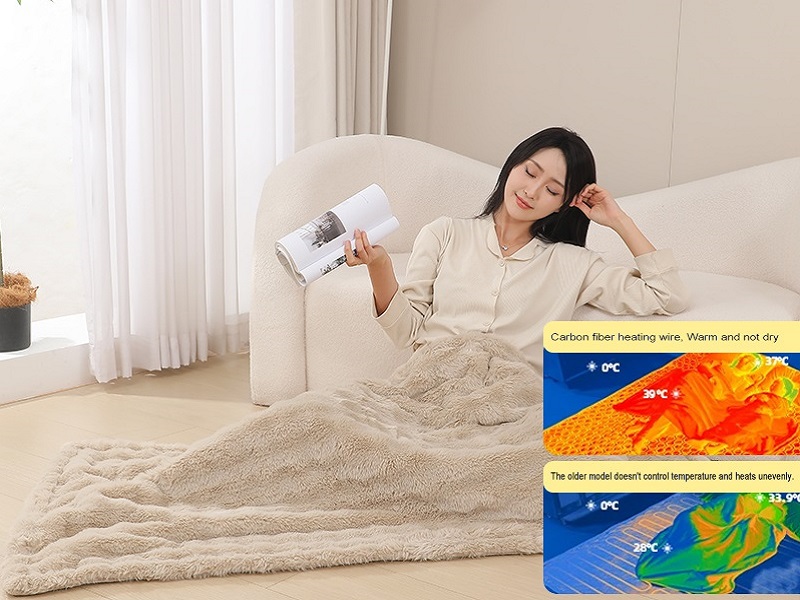
Mulan's Electric Shoulder Pad uses carbon fiber heating wire as the heating element. Carbon fiber wire heats faster than conventional resistance wire and distributes heat more evenly across the heating surface, eliminating the localized hot spots that produce the "burning in one spot, cold everywhere else" complaint that drives returns in lower-quality heated wrap products.
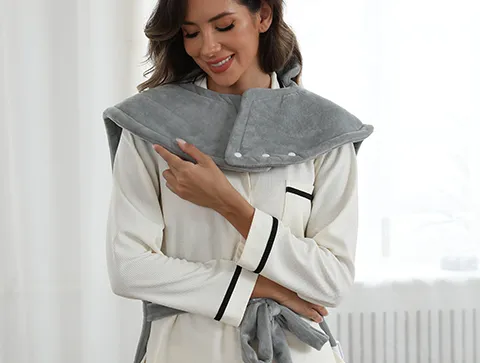
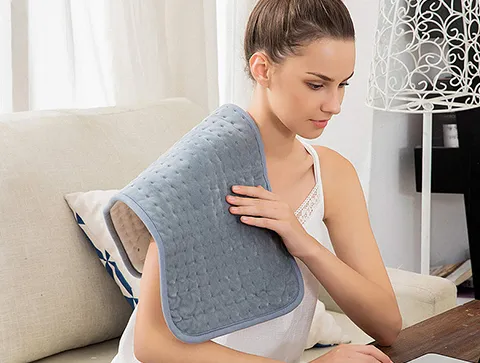
The ergonomic design wraps around the neck and shoulder area with contoured coverage that keeps the heating surface in contact with the target area during use. This is a functional differentiator that matters in listing copy: a shoulder heat pad that stays in position during use delivers a better therapeutic experience than one that requires constant readjustment.
Six Adjustable Temperature Settings
The six-setting controller allows users to find their personal comfort level rather than choosing between "too hot" and "not hot enough." For a product used across different contexts — desk work, post-exercise recovery, evening relaxation — the ability to adjust warmth to the activity and ambient temperature is a genuine usability feature that reduces the "not warm enough" and "too hot" complaints that generate one-star reviews.
For listing copy, six settings is a concrete, verifiable claim that supports a premium price point. It is also a feature that differentiates from lower-cost alternatives that offer two or three settings.
Overheating Protection and Constant Warming
The whole-line constant temperature system and overheating protection mechanism address the primary safety concern that creates purchase friction for electric heating products: the fear of leaving it on and causing a fire or burn. For a product used at a desk or during relaxation — where the user may fall asleep or become distracted — the overheating protection system is a genuine safety feature, not just a marketing claim.
In listing copy and product descriptions, the overheating protection story reduces fear-based purchase hesitation and supports the safety narrative that CE and UL certification reinforces. Customers who are reassured about safety are more likely to complete the purchase and less likely to return the product out of anxiety about using it.
Ultra-Soft Flannel and Washability
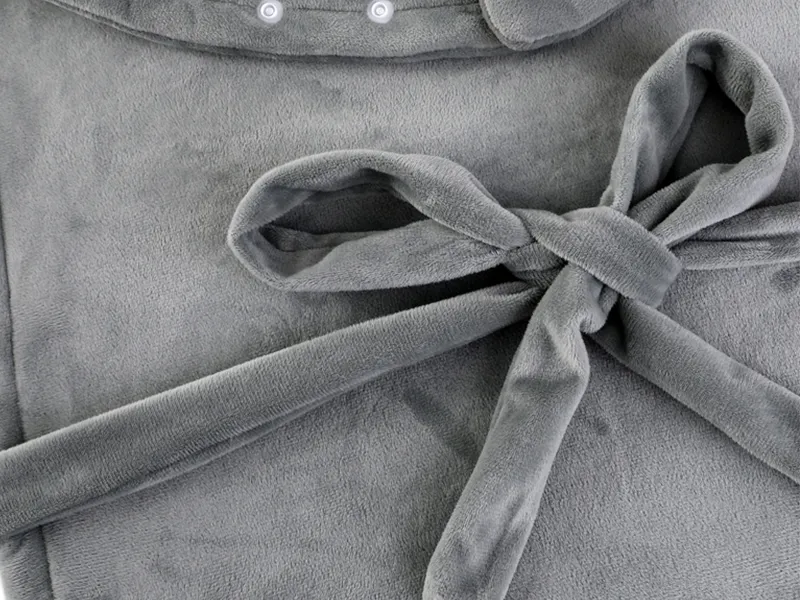
The flannel construction provides the premium hand-feel that justifies a higher price point in a category where the physical experience of the product is a primary purchase driver. Customers who receive a product that feels softer and more substantial than expected are more likely to leave positive reviews and less likely to return.
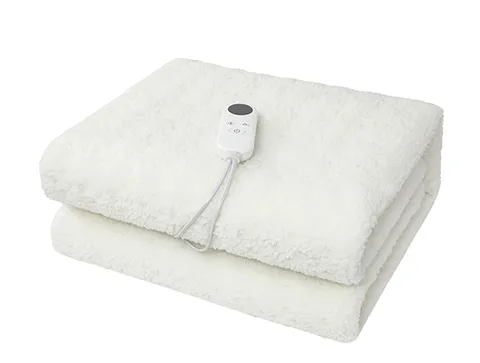
The detachable controller and machine-washable design address the hygiene concern that generates returns in heated textile products over time. A customer who can wash the shoulder pad without damaging the heating system will use it longer, return it less, and recommend it more readily than one who is uncertain whether washing is safe.
Key Specs and Configurations: Electric Shoulder Blanket Buyer Checklist
Locking the specification before sampling prevents the most expensive sourcing error: receiving a sample that meets the spec, placing a bulk order, and discovering that the production units differ from the sample in ways that affect performance, safety, or compliance.
Sourcing Specification Checklist
| Parameter | Mulan Electric Shoulder Pad Specification | Sourcing Implication |
|---|
| Heating technology | Carbon fiber heating wire | Fast, even heating narrative; confirm wire specification matches sample |
| Material | Flannel | Premium hand-feel; confirm fabric weight and finish match sample |
| Controller | 6 heat settings, detachable | Confirm UI matches listing claims; request controller spec sheet |
| Safety system | Overheating protection + whole-line constant temperature | Request test documentation for thermal protection function |
| Certifications | CE and UL certified | Request test reports matching exact model, voltage, and plug configuration |
| Washability | Machine washable with detachable controller | Confirm wash cycle rating and care label content |
| Private label options | Logo on product and packaging, multilingual manuals | Confirm branding scope and lead time for artwork approval |
| Voltage and plug | Confirm for target market (110V/60Hz for US; 240V/50Hz for EU/AU) | Each voltage variant requires its own certification coverage |
The Compliance File Requirement
For marketplace sellers, the compliance file is as important as the product specification. A CE or UL reference on the product page is a starting point — the compliance file that supports a marketplace listing requires the actual test report, the label artwork showing the certification mark, and confirmation that the report covers the exact model number, voltage, plug, and controller configuration being ordered.
Requesting the compliance file before placing the bulk order — not after — is the step that prevents the delisting risk that comes from a certification reference that does not match the product being sold.
Choosing the Right Supplier: How to Vet OEM Capability, MOQ, and Documentation for Wholesale Heating Pads
Supplier selection for a private label wellness product is a risk management decision as much as a cost decision. The cheapest supplier that cannot provide traceable certification documentation, consistent production quality, or reliable lead times will cost more in returns, delistings, and emergency reorders than the unit cost saving is worth.
OEM and Private Label Capability
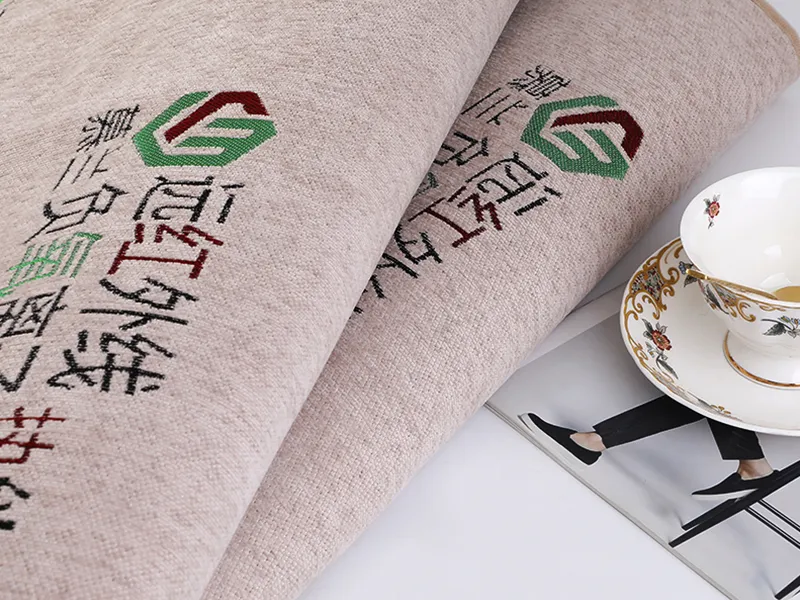
Mulan offers private label capability including logo printing on products and packaging, which is the baseline requirement for building a branded SKU rather than a generic resale product. For e-commerce sellers building a brand rather than arbitraging a commodity, the ability to apply your brand identity to the product, packaging, and insert card is the differentiation lever that supports premium pricing and repeat purchase.
Confirm the scope of private label customization before sampling: logo placement options, packaging design flexibility, multilingual manual availability, and the lead time for artwork approval and production setup. These details affect the launch timeline and should be confirmed before the sample order is placed.
Sampling and Production Timeline
For Q4 inventory planning, the timeline from sample order to bulk delivery is the critical path. Confirm sample availability and lead time, mass production lead time after order confirmation, and shipping options and transit times to your fulfillment location. For Amazon FBA sellers, add the inbound processing time at the fulfillment center to the timeline. Working backward from the target in-stock date to the order placement date reveals the latest date by which the bulk order must be confirmed — which is typically earlier than most first-time importers expect.
What to Request Before Paying a Deposit
| Document or Item | Why It Matters |
|---|
| Test report matching exact model, voltage, and plug | Confirms certification coverage for the specific SKU being ordered |
| Label artwork with certification marks | Confirms label content matches the test report and marketplace requirements |
| Carton markings and packaging specification | Confirms import labeling compliance and fulfillment center requirements |
| Incoming QC checklist | Confirms what is inspected before shipment and provides the basis for AQL inspection |
| Batch and lot traceability plan | Supports recall and compliance response if a product issue arises after launch |
Factory Credibility Indicators
Mulan's company profile lists multi-market certification coverage and export experience across North American and European markets — indicators that the factory has navigated the compliance requirements of major importing markets and has the documentation infrastructure to support them. For procurement risk control, a supplier with documented export history to your target market is lower risk than one entering that market for the first time with your order.
Returns Prevention, Care Messaging, and TCO: Protecting Margin Through the Product Lifecycle
Care Messaging That Reduces Refunds
The detachable controller and machine-washable design are return-prevention features as much as product features. A customer who does not know the controller is detachable before washing may damage the product and request a refund. A customer who knows the correct washing procedure — because it is clearly explained in the listing, the insert card, and the product manual — will wash the product correctly, maintain its performance, and not return it.
Include the washing instruction in the listing bullet points, the product description, and the insert card. Make the detach-before-washing step explicit and prominent. This is a low-cost content investment that directly reduces the "stopped working after washing" complaint category.
Packaging Strategy for E-Commerce
Controller damage during last-mile shipping is a common source of DOA (dead on arrival) complaints in heated textile products. The controller is the most mechanically vulnerable component — it can be cracked or damaged by compression in transit if the internal packaging does not provide adequate protection. Specify internal packaging that cushions the controller independently of the blanket fabric, and request a carton drop test as part of the QC process to confirm that the packaging survives the handling conditions of your fulfillment channel.
TCO Framework for E-Commerce Sellers
| Cost Item | Without Spec and Compliance Investment | With Spec and Compliance Investment |
|---|
| Return rate from heating complaints | High — inconsistent heating generates "not warm enough" returns | Low — carbon fiber wire and 6 settings reduce heating complaints |
| Return rate from safety concerns | High — no documented protection generates anxiety-driven returns | Low — CE/UL documentation and overheat protection reduce safety returns |
| Return rate from washing damage | High — unclear care instructions generate post-wash failures | Low — detachable design and clear instructions prevent washing damage |
| Marketplace delisting risk | High — certification gaps trigger compliance reviews | Low — traceable documentation matches exact SKU |
| Review score trajectory | Declining — returns and complaints suppress rating | Improving — lower return rate supports higher average rating |
| Ad cost per order over time | Rising — lower rating requires more ad spend to maintain conversion | Falling — higher rating improves organic conversion rate |
For a seller moving 500 units per month at a 12% return rate, reducing returns to 4% eliminates 40 return events per month. At a conservative return processing cost of $15 per event including reverse logistics and restocking, that is $600 per month in avoided cost — plus the improvement in review score that reduces the ad spend required to maintain the same sales volume.
Conclusion
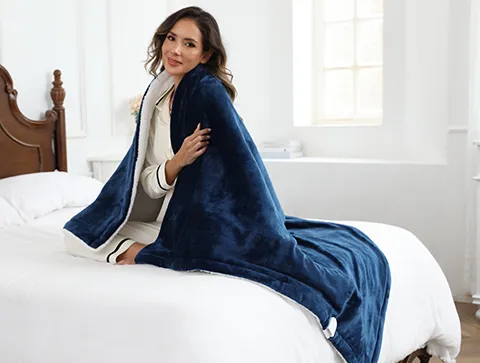
A electric shoulder blanket is one of the strongest winter hero SKU opportunities available to e-commerce sellers in 2026 — but only when it is sourced like a compliance product rather than a commodity textile. The spec set that converts browsers into buyers and keeps return rates low is not complicated: fast carbon fiber heating, six adjustable settings, ultra-soft flannel construction, overheating protection, machine-washable design, and CE and UL certification with traceable documentation that matches the exact SKU being sold.
Mulan's Electric Shoulder Pad provides that specification foundation with OEM private label capability that allows sellers to build a branded product rather than reselling a generic. The margin protection comes from fewer returns, better reviews, and a compliance file that survives marketplace scrutiny — not from the cheapest unit price.
Get Your Recommended Configuration and OEM Pricing
Visit the Electric Shoulder Pad product page to review the full specification, then submit the following details to receive a matched configuration and quotation:
| Parameter | What to Provide |
|---|
| Work condition | Target market (US/EU/UK/AU), selling channel (Amazon/Shopify/retail), planned season launch date |
| Quantity | Sample quantity, first purchase order quantity, Q4 forecast |
| Size and spec | Material (flannel), heat settings, controller style, plug and voltage, packaging type |
| Target metrics | Heat-up time target, maximum temperature range, certification requirements (CE/UL), target return rate |
| Current problem | High return rate, compliance document gaps, weak heating performance, controller failures, differentiation or branding needs |
FAQ
Q1: What is a shoulder heat pad?
A shoulder heat pad is an ergonomic heated wrap designed to deliver targeted warmth around the neck and shoulder area. Mulan's design uses carbon fiber heating wire for fast, even heat distribution, with adjustable heat settings and built-in overheating protection. The contoured shape keeps the heating surface in contact with the neck and shoulders during desk use, relaxation, or muscle recovery.
Q2: How does it compare to a hot water bottle, microwavable wrap, or flat heating pad?
All three passive alternatives share the same limitation: heat that fades and cannot be adjusted. A hot water bottle cools within 20–30 minutes. A microwavable wrap requires repeated reheating. A flat heating pad offers adjustable heat but no ergonomic fit for the shoulder area. An electric shoulder heat pad delivers sustained, adjustable warmth with full neck-and-shoulder coverage — a combination that supports a premium price point none of the alternatives can justify.
Q3: How do better product specs translate into higher e-commerce profit?
Margin is protected by return rate and review score. A well-specified shoulder heat pad — consistent heating, documented safety features, washable construction — generates fewer returns from performance complaints and post-wash failures. Lower return rates improve net revenue per unit, reduce reverse logistics costs, and support higher review scores that improve organic conversion. The margin difference between a 4% and 12% return rate on 500 units per month typically exceeds the unit cost difference between a well-specified and a poorly-specified product.
Q4: Do we need to modify the product for private labeling?
No redesign needed. Standard private labeling covers logo placement on the product and packaging, packaging design and insert card, manual language and branding, and marketplace SKU labeling. The key task is documentation control — confirming that your branded SKU's label artwork includes the correct certification marks and that test reports on file cover your exact model, voltage, plug, and controller configuration. Mulan's OEM process handles this as part of standard private label support.
Q5: What information do we need to get you the right product and quote?
Please share:
Target market and required certification marks (CE, UL, ETL, or combinations)
Voltage and plug type for your market
Fabric and controller preference, including heat settings and washability requirement
Packaging style and private label branding requirements
Order quantity — sample order and first bulk order forecast
Primary pain point — high return rate, compliance gaps, heating performance, controller reliability, or category differentiation
 English
 français
 Deutsch
 Español
 italiano
 português
 Polska
 Nederland